Saturday, July 22, 2017

A museum with room to muse

July 22, 2017 -- The Musée Marmottan Monet is delightful for two reasons:  it is located in a stately home that still has antique furnishings and authentic décor, and it has a huge, modern sous sol (basement) that is air conditioned and houses a magnificent collection of Impressionist paintings, mostly by Monet.  The Marmottan is not crowded.  The only reason for the lack of crowds is that it is a private museum (owned by the French Academy of Fine Arts), and so it is not promoted so much by the State or City. 

Memorial to the writer Jean de la Fountaine in the Ranelagh gardens.

We always recommend this museum to people who ask us for recommendations.  But we haven’t been there ourselves for a few years.  In yesterday’s glorious weather, we decided to walk to the museum and back – one hour each way.  We could have taken the metro’s lines 6 and 9, but we didn’t want to go underground on such a beautiful day.

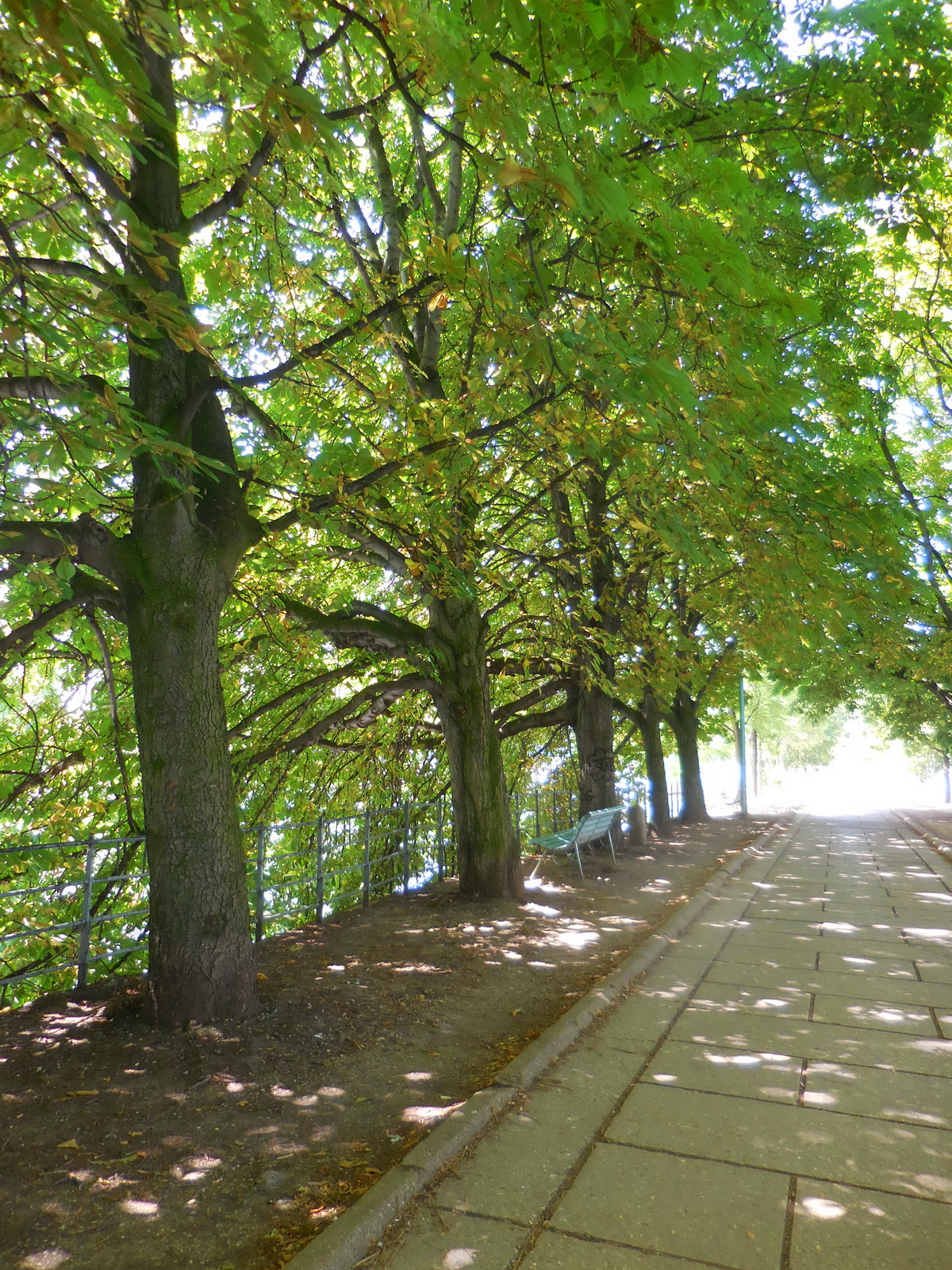
Off we went – past the Beaugrenelle center, over the Seine on the Pont de Grenelle, past the huge, round Radio France building, and uphill on the rue de Boulanvilliers until we reached the top of the hill at Place Jane Evrard.  There we turned into a park called the Jardins du Ranelagh.  The Musée Marmottan overlooks the far side of this park.

Beautiful ironwork on a front door in the 16th -- featuring two black cats!

We visited the ground floor of the old home first, then descended to the sous sol to see all the important paintings.  We finished by exploring the upper floor of the home. 

Originally, the home was a “hunting lodge,” but it looks far more refined than what we imagine when we hear the words “hunting lodge.”  Paul Marmottan bequeathed the home and his art collection to the fine arts academy in the 1930s, and then in 1957, Victorine Donop de Monchy  bequeathed a fine collection of Impressionist paintings to the museum.  That collection was extensive enough that it changed the emphasis of the museum.

Victorine’s father was a doctor who collected these paintings.  His patients included several important Impressionist painters; perhaps sometimes they paid him with paintings.

When Monet’s last heir passed away in the 1960s, he also bequeathed his collections to the Marmottan.  Then the collection of Henri Duhem and Mary Sergeant were given to the museum by their daughter, Nelly.
La Gare restaurant at 19 Chausee de la Muette, across the park from the Marmottan museum.


Then came the collection donated by Daniel Wildstein in 1980.

As a result of the creation of the Denis and Annie Rouart Foundation in the 1990s, the museum has acquired even more important works by Berthe Morisot, Edouard Manet, Edgar Degas and Henri Rouart.

So there is much to see at the Marmottan, and you can see it all peacefully, at your own pace, away from the crowds.

After our museum visit, we walked back through the park to the attractive restaurant called La Gare, because it is in a former train station.  It has a huge outdoor dining area where the tracks used to enter the station. 
A Tauck river cruise boat docked where Viking River Cruises usually is, by the Pont de Grenelle.


This was a lovely place to dine on a beautiful day, back away from the automobile traffic in a garden-like setting.  But the food was merely okay or just barely good.  We’d do it again just to be able to sit in that beautiful place on a lovely day, but we wouldn’t go back there for the food.

The mid-afternoon down-hill walk home was long and charming, and we had time to shop for groceries in the evening.  We must prepare!  Dan and the granddaughters return from Spain and Italy today!


Friday, July 21, 2017

Pizza for Philippe

July 21, 2017 -- We dined at three Italian restaurants in the past three days, and each one was different from the others.  I’ve already written about Bacco, the fine Italian place on rue Mademoiselle.  There is no pizza to be found at Bacco.  It just isn’t that kind of place.

The next night we dined at Pietro Commerce, and we were surprised about several things there.  First I should explain that this is a local chain of five well-capitalized restaurants:  four in the 15th arrondissement, and one on the Champs Elysees.

Bartholdi's Statue of Liberty on the Ile aux Cygnes.

Pietro Commerce is the one closest to us, right across from the centerpiece of the neighborhood, the St. John the Baptist of Grenelle church.  We remember that years ago, this was the site of a restaurant known for its bouillabaisse.  Then it became a restaurant that featured the country cuisine of the Auvergne area.  Initially, I think I was dismayed to see that an Italian place featuring pizza and pasta replaced the French country cuisine.  But I am no longer dismayed.

Pietro made many much-needed improvements to the building, including adding serious air conditioning.  The interior is clean, inviting, and modern.  The wait staff is friendly and helpful.  The food arrives at the table fairly quickly, yet it is all homemade.  The pizza is the best I’ve ever eaten in Paris – by far.  It is far better than almost all the pizzas I’ve eaten in my life.  Tom had his beloved beef carpaccio, and it was delicious.  He also helped me with that pizza.  Tom eyed the big antipasto platters delivered to a nearby table that was occupied by a large family.  He wants to take Dan and the granddaughters there next week so we can share a couple of those platters with them.

Swan in the Seine, near the Ile aux Cygnes.


Parisians generally eat pizza and hamburgers with a knife and fork.  So do I, especially when I’m in Paris.  This reminds me of the issue of Charlie Hebdo that I bought just before Bastille day.  Charlie Hebdo is a weekly tabloid of pure sarcasm; the editors and writers lampoon everything and everyone.
So of course, they made fun of the American president (as well as the French president) during that holiday week because the American president and his wife, Melania, were visiting Paris then.  However, the Charlie Hebdo writers did not do their research.

They assumed that the American president eats big, juicy, messy hamburgers with his hands – as most Americans do.  That’s how they portrayed him in a cartoon on Page 2 of that edition.    In fact, the American president eats hamburgers and pizza with a knife and fork, just as Parisians do, in spite of the fact that the American president is a New Yorker.  New Yorkers generally take pride in the way they eat pizza with their hands (folding it first, of course).

Allee des Cygnes, on the Ile aux Cygnes.

Enough of this multi-cultural discussion.  Let me return to the subject of three Italian restaurants.
Last night, we dined at another relatively new place, Ristorantino Shardana, which is on the rue du Theatre just several doors down and across the street from our apartment.

Shardana features the cuisine of Sardinia, the second largest island in the Mediterranean Sea.  It takes its name from the name for warriors who occupied that island in the 11th Century B.C.

Seafood is important in Sardinia, and so it is important on Shardana’s menu.  We both had the daurade (sea bream) and vegetables – which were excellent.  Our shared starter was a lovely little mountain of burrata covered with layers of super-thinly sliced beefsteak tomatoes and fresh basil.  (There is no pizza at Shardana).
Jardin Caroline Aigle, named for a female French fighter pilot.


I found a French restaurant review which claims that the beef at Shardana is very tender, so we may try that next time. 

We have high opinions of all three of these Italian restaurants in our neighborhood.  Each one is worth a trip from elsewhere in Paris.  My only caution is that Shardana does not have good air conditioning.  Fortunately for us, the weather has cooled down.

Yesterday afternoon’s long walk was down the rue Lecourbe and rue de Sevres to the boulevard Montparnasse.  We passed by the enormous Necker children’s hospital that Melania visited on July 13.  After passing Necker, we veered off to venture into the C&A store in the Maine commercial center on the rue de l’Arrivée near the Montparnasse skyscraper.

Finally, I found the people who shop in Paris.  They are in the C&A store.  They come from all over the world.  For the most part, these masses of shoppers are not in the smaller shops and boutiques.

At C&A, I found a sleek, flowing black cardigan that goes with everything for just 25 euros.  That’s all I needed; but Tom and I enjoyed looking at the masses of shoppers who were energized by the plentiful stock of good values. 

Shop window full of honey jars, in the 5th arrondissement.

I’m convinced now that the reason women’s clothing shops are fairly empty in Paris is that they stock mainly sizes 2 through 10 (U.S. sizes). 

However, 75 percent of all women are larger than that.  Those shops are catering to 25 percent of the female population, and the other 75 percent are shopping at C&A (or similar places).

I do like a shop called Le Monde et Nous, however, and I will return there soon (on the avenue Felix Faure).  The Italian-French shopkeeper there carries nice, very feminine Italian clothing and shoes for all sizes.

That brings us back to things Italian.  I should mention that most bakeries in Paris now carry ready-made individually sized pizzas for those who want a quick lunch or snack.  Neither one of us has ever tried one of these French bakery pizzas, so we don’t know how good or bad they might be. 

The arcade in the Place des Vosges.


Tom bought two the other day, however, for the local homeless guy who we often see and greet in our neighborhood.  When our favorite bakery is open, this guy sits on a stoop nearby.  The guy’s name is Philippe.

Tom asked Philippe if he could get him something from the bakery.  Philippe thanked Tom and said that yes, he would like to have pizza.  What kind of pizza, Tom asked.  Philippe said to just say “un pizza pour Philippe,” and the gals in the bakery would know what to sell to him.  Tom did so, and was given two slices of pizza to buy for Philippe.  Philippe was glad to receive them.

Thursday, July 20, 2017

Lulu, leaving behind the anonymity and isolation


Notre Dame de Paris
July 20, 2017 -- A couple years ago, a fellow named Vincent decided to start up a new service in the 4th arrondissement, in the St. Paul neighborhood.  That service is now spreading throughout Paris, and it is about something more than providing services.  It is about making human connections.

The service is called “Lulu Dans ma Rue,” meaning “Lulu in my street.”  It puts people who need services rendered together with people who can render those services.  What services?   Examples are delivering groceries, delivering warm croissants and the newspaper on Sunday, making minor repairs around the home, assembling that new bookcase from Ikea, walking the dog, watering the plants while you’re on vacation, carrying heavy boxes down to the basement, getting a troublesome computer to work, etc.

Graffiti art along the Seine
Those who need to place an order for help can do so by going to a nearby kiosque that is staffed by volunteers, or placing the order online at www.luludansmarue.org.

Yes, it is a sort of “job creation” project; but Lulu Dans ma Rue is also about a conviction, clearly stated on its web site.  Let me translate:

Lulu dans ma rue, is also the conviction that our society will be better if we put humanity back in our daily lives.  We’re in a society where services are driven by marketing and excessive productivity that depersonalizes the benefits rendered;  it is time to recreate a place with authentic human relations and with confidence in my neighborhood.  That’s a way of reaching out to the folks in my neighborhood that I know and that I appreciate, to help me in my daily life.  The promise of Lulu dans ma rue is then to construct the neighborhood life that I love and that I desire, where the service rendered consciously permits the re-creation of ties, leaving behind anonymity and isolation.

Ah, so Parisian!

In 2015, I think the going rate for a Lulu’s help was 15 euros per hour, and that seems to have been adjusted now to 20 euros per hour.  The Lulu service collects a 15 percent fee for connecting Lulus with customers.

Using the Lulu service, housecleaning costs 20 euros per hour.  A helping hand simple tasks is 10 euros for 30 minutes.  Help with heavier tasks is 15 euros for 30 minutes.  Babysitting is 20 euros per hour, and gardening is 15 euros for 30 minutes.  Feeding a cat or walking a dog is 10 euros per visit.  You get the idea.

The concept is that you’re doing business with others in your neighborhood; hopefully, you will get to know them.  You will care about them, and they’ll care about you.

Art along the Seine
I do not know if there is any vetting of the Lulus, or of the customers, for that matter.  I don’t know if local businesses have complained that this is unfair competition for them.  And I don’t know of any problems that have resulted from Lulu interactions gone wrong.

I do know that I really like the concept.  I wonder if this would work back home in Florida?

Here in the 15th arrondissement, a Lulu kiosque has been set up at the Place du Commerce, a couple blocks down the street from us.  A temporary kiosque is also set up at the Grenelle outdoor market, which operates on Wednesday and Sunday mornings. 

According to the 15th’s mayor, Philippe Goujon, about a hundred residents stop by the kiosque at the Place du Commerce every day!

Wednesday, July 19, 2017

The facts and a fine Italian evening in Paris

The hot weather reminded me that Bacco, a relatively new fancy Italian resto in our neighborhood, is air conditioned – sort of.  So I made a reservation via lafourchette.com -- with a 30 percent discount.

We were warmly greeted when we arrived.  We think we were remembered, but I’m sure the database maintained by lafourchette.com helps to prod the restaurant owners’ memories.  That’s all well and good, if you ask me.

We were seated at the same table we always have when we dine at Bacco -- by the front window.  Our shared starter course, a Burratina (Italian cheese served with raw vegetables and fine Parma ham) was beautiful and delicious.
The Burratina at Restaurant Bacco


Tom had a tender and tasty onglet of beef that was served in medallions, and I had a barely seared red tuna and vegetable croustillant that was superb.  Dessert was a glorious tiramisu that I should have photographed but did not.

By the time we left, the restaurant was filling up with people and the air conditioning was struggling to keep up.  We paid the bill before we melted and then had a pleasant stroll home.

There is another, less fancy, new Italian place nearby, on the picturesque Place Etienne Pernet, which we will try tonight.  We’ve passed by there during the dinner hour recently, and it looks promising.
Italian olive oil, balsamic vinegar, and sparkling
water at Restaurant Bacco

Today I arose early and went for a 10,000 step hike before the heat and humidity intensified.  Tom went for a mid-day walk that was a little less demanding.  Both of our walks involved ambling through the outdoor market under the Grenelle tracks.  I saw it in the morning as the vendors were setting up; Tom saw it in late morning, when it was going full swing, but still was not too crowded because it was Wednesday, not Sunday.

Yesterday, Tom had ventured out solo to go to his second doctor’s appointment of this summer (just routine). 

After Tom’s appointment, we had another pleasant French pharmacy experience in which Tom bought a month’s supply of his blood pressure medication for 4.20 euros.  This isn’t the co-pay; this is the entire amount.  Health care, including prescription medication, is far less expensive here than in the U.S.  An ordinary office visit with the doctor, with a full 20 minutes of the doctor’s time, is only 85 euros.  Again, this is not the co-pay; this is the FULL cost.  This is not a political statement folks; these are facts.

Tom is very pleased with his primary care doctor here in France.  He wishes there was someone just like her in Fort Myers or Sanibel.


Monday, July 17, 2017

Keeping it quaint and cool

Quaint old building at the corner of the rues du Theatre and Tournus,
in the Grenelle neighborhood.

Lunch at Eclectic, in the Beaugrenelle Center.
July 18, 2017 – Cold pea soup on a hot summer day.  Doesn’t that sound good?  Garnish it with a dollop of excellent goat cheese, grab a couple of rustic baguettes, and pour yourself a glass of pale, chilled rosé.  Add a plate of fine Italian beef carpaccio and a few glasses of sparkling water, finish with a café gourmand, and you have the perfect lunch for two.

We treated ourselves to all this in the air-conditioned comfort of the Eclectic brasserie after a walk on the bucolic Île aux Cygnes and an hour or so of shopping in the Beaugrenelle center, where we bought nothing. 

In the afternoon, we had a funny experience at the post office.  We were there to pick up a small package addressed to our friend Roy, who owns the apartment.  A notice indicated that the letterbox on our building was too small for the package.

We took our driver’s licenses and a piece of forwarded mail of our own, to show that we really do belong at the apartment’s address.  We explained to the postmaster that we were picking up the package for our friend, who is in the U.S.  He said that the rules are such that we are not allowed to pick up the package.  We thought this might happen, but we wanted to try to do this for Roy if we could.

So, we said we understood and agreed, and we left.  As we were crossing the street, the postmaster came running after us, package in hand!  He said, “I’m sorry.  I did not make myself clear.”
Evidently, he had been saying that the rules are such that we are not allowed to pick up the package, but this time he will allow it since the package is “not important.”

View from a park bench on the Ile aux Cygnes.


We told him it was our fault for not understanding him.  If you miss a word here or there, you can end up thinking something that isn’t so.  All three of us had a good laugh over the misunderstanding.
The package really wasn’t too big for our building’s letterbox. 

In the evening, we walked slowly to the Trois Garçons brasserie to join a crowd of locals for a dinner on the terrace.  Mine was a delicious, whole daurade royale (golden sea bream), and thankfully, nobody offered to de-bone it for me.  Tom unfortunately ordered a steak – almost always a mistake in a regular café or brasserie.  The steak was so tough that it was practically inedible.  We traded knives, because mine was sharper.  But still Tom could barely cut that steak.   I shared my fish with him.  His fries were great, however, and I had a wonderful pile of carrots cut into tagliatelles, roasted in honey and butter.


We thoroughly enjoyed being out with everyone else.  The couple at the table next to us said, “Welcome to Paris,” because they heard us speaking to each other in English.  Then they asked us several questions about where we live.  I ended up telling them about mosquito control in Lee County, because Tom brought up the subject.  The French always seem to be interested in this subject, and they are impressed by the elaborate mosquito control program that we have in our part of Florida.

On the way to and from Trois Garçons, we passed through the Place Etienne Pernet, the site of an irritating and not-so-successful bar called Charlie Birdy.  In recent months, Burger King had announced its intention to establish a fast-food restaurant there.  But thanks to the “strong mobilization of Philippe Goujon [the mayor], who had agreed with the neighbors about the risks of nuisances tied to the establishment of a Burger King restaurant originally planned,” the building will instead become home to a brasserie called “Au Bureau” (source: Paris 15 magazine, summer 2017 edition).
Pont de Bir Hakeim


At the other end of the rue du Commerce is a McDonalds which is heavily patronized by locals.  Tom asked why the Burger King should be denied if the McDonalds was allowed.  I speculated that the problem is the site; the Place Etienne Pernet is the center of the old village of Grenelle.  With the church and a number of old, village buildings (including the one that houses Charlie Birdy), the whole place is picturesque, historic, and architecturally significant.  The same can’t be said of the McDonald’s site.


I thank Philippe Goujon and the neighbors for keeping Paris Paris.

A weekend of walking through Paris

Parc Monceau
July 17, 2017 – The lines 6 and 2 of the Paris metro when put together, form a perfect oval around the heart of the city.  Line 6 offers a great view in its southwestern stretch, where it is an elevated train over a part of Paris that was a swamp, a long time ago. 

On Saturday, we took the 6 to Etoile, where we switched to the 2 and disembarked at Monceau, the beautiful park created in 1861 in the northern part of the 8th arrondissement – one of the chic residential areas of Paris.

After a long, leisurely stroll through the park, which was being heavily appreciated by many families on that gorgeous weekend, we paused to stare at the magnificent mansion just on the edge of the park, at 5 rue Van Dyck.  Where does the money come from to build a house like this?

Peering through the gate at the side of the mansion at 5 rue Van Dyk

In this case, it came from chocolate.  Jean-Antoine Menier, a chocolate maker from the Seine et Marne area, made medications based on chocolate in the 1800s.  In 1836, he created the first chocolate bar (tablette de chocolat).  It was wrapped in yellow paper.

His son, Emile-Justin Menier, took the helm and received a gold medal for “pharmaceutical products” at the Universal Exposition.  Emile successfully expanded the business, buying 1500 hectares in Nicaragua so he could mitigate the fluctuations of the cacao market.  He had a new mill built to modernize his factory in the Seine et Marne area.  The mill was unusual and beautiful:  a metal structure with a multi-color brick exterior, completed in 1872.  By 1876, the factory was producing 7,600 tons of chocolate annually.

The straw gorilla in this flower bed at Parc Monceau is wearing a tank top
that promotes Paris as a site for the 2024 Olympics

From 1872 to 1874, he had his own house built facing the Parc Monceau.  The luxurious carvings on the exterior walls give the home an opulence unmatched by other houses in the neighborhood.  This architectural gem is not open to the public; it is now divided into a few large apartments.

We walked on through the park, exiting at the rue Rembrandt, then descending the hill on rue Courcelles.  We saw that the grand, formerly crumbling church of St. Philippe de Roule is undergoing a massive renovation, including a rebuilding of its roof.  What looks like a Butler building has been constructed over the entire top of the church.  This is quite a production!

We continued our descent to the Champs Elysees along the rue La Boetie.  The crowd along that celebrated avenue was thick.  We somehow made our way across it, and then followed the rue Pierre Charron and avenue George V to the Seine.  We noticed that people have been putting those awful love locks on the chain surrounding the flame sculpture by the Pont de l’Alma – what has become the memorial to Princess Diana.  I do so wish that love lock fad would go away!
Shinto gothic house in the 8th arrondissement.

When we crossed the Seine and were passing by the Russian Orthodox church and cultural center, its bells began to ring.  I didn’t know it had bells!  They aren’t visible.  Perhaps they are in the golden domes?

After a stroll down the avenue Bosquet, we stopped in at the comfortable brasserie La Terrasse for refreshments.  Then it was just a short stroll home.

In the evening, I used lafourchette.com to reserve a table at O Fil Rouge.  There we had a terrific dinner.  The owner recognized us, even though I don’t think we made it there last summer.  I highly recommend this restaurant, located a bit out of the way on the rue St. Charles near the rue Ginoux.

Yesterday we took the line 6 to Denfert Rochereau, the place where you can begin a tour of the Paris catacombs.  Instead, we remained above ground to walk along the beautiful avenue René Coty.  This boulevard is blessed with a shady pedestrian central walkway – a great place to walk on a warm afternoon.

Walking on the avenue Rene Coty
We walked all the way to the Parc Montsouris (“Mouse Mountain”) in the southeastern corner of the 14th arrondissement.  After we’d toured the park, we walked back up the avenue René Coty, pausing to use one of the brand new Wallace Fountains.  Unlike the old Wallace Fountains which run continuously, the new ones have a button that you push to make the water flow.  Tom discovered that the secret is that you have to push the button really hard to make it work.

A new Wallace Fountain, on the avenue Rene Coty.

We turned toward home on the rue d’Alesia, stopping to visit the church of Saint-Pierre de Montrouge.  The church's architect, Emile Vaudremer, created a simple yet grand church -- one of the first in a style known as Roman Primitive.  Displays in the back of the church indicate that it has a sizeable staff and lots of programs.  This is an active parish.

Church of Saint-Pierre de Montrouge
The rue d'Alesia becomes the rue Vouille and then the rue de la Convention in the 15th arrondissement.  Right where it becomes rue de la Convention, we stopped at the Tasco brasserie for refreshments.  This included sharing a piece of homemade tiramisu which was very delicious.

From there, we walked up the rue de l’Abbé Groult to our neighborhood where we stopped to buy groceries at the Carrefour City on our street.  I miss the Dia discount grocery that Carrefour City replaced, but I do appreciate Carrefour for being open on Sunday.


Scenes in the Parc Montsouris


In the evening, we dressed up and walked to La Gauloise for a fine steak dinner.  Mostly I eat fish and vegetables for dinner these days; last night was a notable exception.  The beef filet at La Gauloise is reliably tender and perfectly cooked.  It comes with an impossibly large serving of great fries.  I can only eat a small part of that mountain of fries, but Tom really attacked his.  We skipped the starter course and dessert.

What we love about La Gauloise is not just the food; it is the plush ambiance.  We were able to sit at our favorite table, just inside the front window which was open to the terrace.  La Gauloise is convenient, too -- only a ten- minute walk from our apartment.

So ended a weekend of walking – about 20,000 steps each day.


Saturday, July 15, 2017

Let freedom sing

The St. Lambert park was built on the site of a former gasworks.  Dimitry
Vicheney's first job was working on the crew that demolished the gasworks and created this fine park.
July 15, 2017 – Under the guise of a holiday stroll along a lively street in Paris, we continued my investigation into Russian influence on the history of Paris.  Specifically, we wished to locate the other two Russian Orthodox churches that Dimitry Vicheney mentioned in the interview with the Paris 15 magazine reporter.

We’d already seen the doorway to the Russian Orthodox church on the rue Olivier de Serres.  And on the 13th, we visited the big, shiny, new Russian Orthodox church and cultural center at the corner of Avenue Rapp and the Quai Branly. 

Now we had to find the Russian churches on the rues Petel and Lecourbe.  I’ve been wanting to explore the rue Lecourbe anyway; it is a busy shopping street not far from our apartment, and for some unknown reason we haven’t walked or shopped there much at all in the 20 summers we’ve been here.
Old fashioned roses still blooming in the St. Lambert park.


First we took a diversion on the rue Peclet (near the town hall for the 15th arrondissement) and noticed the Chaplin St. Lambert cinema.  This summer, the cinema is featuring an Alfred Hitchcock retrospective.  There is another Chaplin Cinema in the 14th, in the Denfert neighborhood.  Good to know.

Next we found the odd little Russian Orthodox church at 3-5 rue Petel.  It is a small, flat-roofed, one-story, strange structure made of ceramic-faced block with a stark, 1930-vintage appearance.  The bulletin posted on one side of its doorway is entirely in Russian – no French or English.  On the other side of the doorway is a wooden plaque that does give the name of the church, which is very long and includes the names of a number of saints.  Obviously, a committee charged with naming the church could not reach consensus. 

Plaque by the door of the Russian Orthodox church on
the rue Petel.


Back at the corner of rue Lecourbe, we turned and walked past the side of the town hall.  There Lecourbe becomes a shopping street with wide sidewalks, and lots of stores and restaurants.  

Lecourbe is not chic; the buildings have not been recently cleaned, and the street infrastructure is a little bleak; it does not have lots of street trees the way that rue de la Convention does, for example.  The shops and small restaurants seem to have plenty of business.  Many were open even though this was a national holiday. 

We found the doorway to the last of the Russian Orthodox churches on our short list.  It was a door to a Haussmannian building with a couple courtyards.  The sign indicated that the church was at the back of the second courtyard.  It had to be a small church, like the others, and we did not intrude.  We continued our walk.
Sign for the St. Seraphin of Sarov church at 91 rue Lecourbe.


When we reached the end of Lecourbe at the Place Henri Oueuille we turned around and walked down the sunny side of Lecourbe.  The temperature was just mild enough that we enjoyed the sun in our faces.

At rue Mademoiselle, we veered off toward our neighborhood.  An entrance to a Haussmannian building caught my eye because of whimsical carvings of a dog and a cat hovering over the door.  Nice!

Back at the apartment, we did our usual July late afternoon thing: rest and watch the Tour de France for an hour or so.  Then we dressed up for our holiday dinner at Le Tipaza.
Tom waits for dinner at Le Tipaza.


We like to be seated toward the back of the restaurant, and without asking for it, we were given our usual favorite table.  The fancier dining room with crystal chandeliers is toward the front, but we like the cozier back room – especially when air conditioning is needed.

Service was wonderful and the tagines were delicious.  It was a simple dinner, without starter courses or desserts – except that Tom had a café gourmet, which included a piece of Turkish delight and a small pastry stuffed with fig – a sort of fancy fig newton.  We left feeling well nourished on meat and vegetables.

We especially enjoy the walk to and from Le Tipaza because it includes the shady, broad avenue Emile Zola, and the shady shopping street, rue Saint Charles.  The streets are usually calm during our after-dinner walk home.

This time, however, traffic was backed up everywhere because of people trying to go somewhere where they could watch the Quatorze Juillet fireworks, which are set off behind and from the Eiffel Tower, nearby.


Dog and cat carvings above door
on rue Mademoiselle


But there aren’t only fireworks to celebrate the national holiday.  Just in front of the Eiffel Tower, an elaborate stage had been erected for a concert that began at 9PM.  This annual concert features mainly the national symphony orchestra – which is fantastic – as well as some featured opera stars from France and elsewhere.  Two American opera singers were included this time.  You can watch the entire concert here, on YouTube.

We were home in time to watch the magnificent concert on TV.  When it concluded, we went up to the maid’s room, where we have an even better view of the Eiffel Tower.  We watched the fireworks from there.  You can watch them here, on YouTube.  The video is a half hour long; put it in full-screen mode, kick back, and enjoy the show.

You can see on the video that the Champ de Mars was full of people – mostly young people – screaming in delight at the fireworks.  There were plenty of families with small children.  I love these fearless people.  Paris is still Paris.  Paris knows how to do fireworks.


The sound track for the fireworks is great, too.  It includes a wide variety of music – classical and popular.  In the middle somewhere, Frank Sinatra sings “I Love Paris.”

I can’t imagine another city having a more impressive fireworks display.  Sure, some put on some great shows.  But no other city has the Eiffel Tower, which was made for a show like this.  Grande Dame de Fer et Dame de Feu.


Friday, July 14, 2017

An invitation to Jim


Interior of the new Russian Orthodox Church and cultural center at the Quai
Branly and the Avenue Rapp

July 14, 2017 – Yesterday’s Washington Post had a story with this lead: 

“As President Trump prepared to travel to the City of Light this week, this question came up: What does Jim think?

Some background: On the campaign trail, Trump would occasionally mention his friend Jim, who used to go to Paris every summer with his wife and family but stopped because ‘Paris is no longer Paris,’ a problem that Trump seemed to blame on crime in the city and an influx of immigrants.

After Trump mentioned Jim at the Conservative Political Action Conference in February — calling him a ‘very, very substantial guy’ — the New Yorker set out to try to find him and questioned all of the numerous Jims in Trump's life. Jim was not located, and an article about the hunt ended: ‘Jim, if you’re out there, levez-vous, s’il vous plaît.’ ”

Numerous journalists have tried to find this Jim in order to interview him; now it is not clear whether Jim exists.  However, this anonymous journalist did find Tom, someone the President of the United States has never met.

The new Russian Orthodox Church and Cultural Center as seen from the
Pont de l'Alma
Tom goes to Paris every summer with his wife and he refuses to stop, because Paris is still Paris.  Nothing seems to keep Tom away.  Even when forces conspired against him last summer, Tom still managed to take his wife to Paris for a month.  Normally, the couple spends two months or more anually in the City of Light.  They’ve been summering in Paris for twenty years.

What about all the immigrants, you ask?  Tom would tell you that they are an integral part of what makes Paris Paris.  For example, one of Tom’s favorite Parisian restaurants is Le Tipaza, on the rue St. Charles.  Le Tipaza is a beautiful North African restaurant, run by immigrants and people whose parents were immigrants.  Tom often takes his wife to Le Tipaza on the French national holiday, Bastille Day (called “Quatorze Juillet” in France) because it is a special place and it is open on that holiday, which happens to be today.  The food there is terrific; try the tagines.

Immigrants have been making Paris Paris for a long time.  Many Parisians have Spanish, Italian, Irish, or African surnames.  This summer, Tom’s wife, Barbara, has been fascinated by stories about Russian immigrants who came to Paris a hundred years ago, and who made valuable contributions to the city, which had been deeply wounded by World War I.
An exhibition of the works of artist Alexandre Serebriakoff was featured in the
Russian Orthodox Church and Cultural Center.  This illustration by Serebriakoff shows the
intersection of the Boulevards Raspail and Montparnasse.
Tom knows that France has a colonial history, and so it is obligated to accept immigrants.  And Tom knows that this immigration is a very good thing.  He loves the cultural diversity that a city like Paris provides.  Most of the year, Tom and Barbara live on an island that is beautiful, but lacks cultural, racial, and ethnic diversity.  Paris in the summertime gives them the exposure to diversity that they crave.

Tom has no idea who or where Jim might be.  But if Jim and his wife would like to come to Paris again, Tom and Barbara would love to show them the Paris that they know so well.  It is still Paris, after all.
Painting by Alexandre Serebriakoff

There was a time when France wasn’t so great, but you have to go back many, many centuries to find that time.  For example, take the experience of Anne of Kiev, one of Barbara’s ancestors.  Anne immigrated from the Ukraine to France in order to marry Henry I in 1051.  After the wedding, she was crowned at Reims.

Anne was not impressed by France.  She wrote to her father in 1051:  “What a barbarous country you sent me to – the dwellings are somber, the churches horrendous and the morals – terrible.”  Another translation states that she wrote that France was  “a barbarous country where the houses are gloomy, the churches ugly and the customs revolting.”  She thought the people were uneducated and unwashed.   When she saw that her wedding banquet had only three dishes, she was appalled.

She complained bitterly about almost everything in France, including the food.  Fine French cuisine had not yet been developed.  In those days, the Ukraine had a more refined culture than France did – by far.  In fact, Anne’s father, Yaroslav the Wise, was known as the “initiator of the golden age of Rus.” 

Anne was well-educated in the fields of Latin, Greek, and medicine.  She signed her name beautifully on documents, whereas her husband, Henry I, signed with an “x”.  He was probably illiterate.
The cover of this week's Charlie Hebdo, a satirical publication.

When Henry I died in 1060, Anne became regent and ruled France for several years.  She was recognized by Pope Nicholas II as a skilled politician.  Even before she became regent, she had actively assisted her husband in ruling France.  The king had great respect for her.

She established an abbey and a nunnery. Her accomplishments are a significant part of French heritage. 

Most importantly, all subsequent kings of France descended from Anne of Kiev, an immigrant from Russia.


Thursday, July 13, 2017

Take a hike

Wildflowers on the Petite Ceinture

July 13, 2017 – In spite of the slightly rainy weather, we decided to take a hike through nature, along the Petite Ceinture: a long section of what was once a beltway train around Paris.  The train was abandoned years ago, but the tracks and the banks of thick vegetation remained.  Under the green guidance of the Bertrand Delanoe administration, the City of Paris turned this neglected resource into a walker’s wonderland.

A couple beetles doing their thing
The gritty sandy mix used to fill and level the space between and beside the rails blends beautifully with the chunky gravel and stone mix that remains along the tracks.  That sandy mix is easy on feet that grow weary of walking on urban pavement.

To help the environment and to keep maintenance costs down, the gardeners have turned most of the work over to Mother Nature.  The native wildflowers that she fosters there are becoming more beautiful every year that we walk along the Petite Ceinture.  Surely the gardeners must pass through occasionally to remove noxious plants (does poison ivy grow in Paris?), but we’ve never seen them there. 

Like on the Ile aux Cygnes, there is no water supply along the Petite Ceinture, so the wildflowers and other vegetation must be tough; they have to make it on their own.

This year, Queen Ann’s Lace rules the Petite Ceinture, but there are plenty of other wildflowers adding spots of color everywhere.  I particularly love the orange-red poppies.  Can you identify some of the other flowers?


When we reached the end of the trail at the rue Olivier de Serres, we climbed steps to reach the street level.  Where we’d started our walk along the railway, at the foot of the Avenue Felix Faure, we were in former swamp land, so we had to climb a few flights of steps to get up to the trail.  Here, at the end, we were on the land that rises up to become Montparnasse, so we had to climb many steps again to reach the street.  The left bank of Paris seems fairly flat until you experience these steps (as well as those around the Pantheon area in the 5th arrondissement).

On the rue Olivier de Serres, we located a doorway leading to one of the Russian Orthodox churches that Dimitry Vicheney mentioned in his interview (see yesterday’s journal entry).  Beyond the mysterious doorway were steps leading up to a courtyard, but because all the lettering on the bulletin posted at the door was Russian, we did not feel welcome to visit as we do the other churches in Paris.  Also, a school is associated with the church there, and we did not wish to be a distraction to the kids.  I wonder if the kids speak Russian in that school?  I suppose they do.

Bulletin, all in Russian.


Stairs leading to Russian Orthodox church and school


Continuing our trek down the rue Olivier de Serres, Tom was becoming footsore, so I suggested that we have refreshments at La Source again, at the intersection of the rues Alain Chartier and Vaugirard.  After a café gourmand which included a little ice cream, Tom was renewed and we walked home in the most direct way possible (rue Alain Chartier and rue de Javel to the Place Etienne Pernet and rue du Commerce) because of the rain. 
Axuria's incomparable souffle au Grand Marnier

At home we did the usual: relax while watching the end of the day’s stage of the Tour de France.  Earlier, as we’d started our walk, I’d ducked into Axuria to make a dinner reservation.  So in the evening, we dressed up a little and walked back down the Avenue Felix Faure for a fine dinner at 8.  It was a thick, juicy veal chop for Tom, sea bass with peas and risotto for me, and then soufflé au Grand Marnier for each of us.  That soufflé is heavenly, and it is cooked perfectly every time. 

By the time we walked home, we’d logged almost 25,000 steps for the day. 
The back of the dining room at Axuria.

Sunday dinner at Axuria is tempting.


Tom's veal chop was more like a slice of a roast.